
# Visiting Saint-Laurent-du-Pont: A Guide to the Gateway of the Grande Chartreuse
Saint-Laurent-du-Pont is the town most English-speaking visitors to the Vallons du Guiers pass through without quite realising what they have passed through. It sits on the Guiers Mort, the western river of the valley, where the road from Voiron and Grenoble meets the road up into the Chartreuse mountains. It is a working valley town, not a resort: bakeries, a river, and a direct, walkable link to the Carthusian monks who shaped this whole landscape.
That makes it an ideal base, and an ideal first stop. From here you can reach Les Échelles and the Sardinian Road to the north, the Cirque de Saint-Même to the east, and the road up to the Grande Chartreuse monastery itself. Come for a day and you can still get a real sense of the place: its bridges, its old distillery hamlet, its heritage trail, and the quiet feeling of standing at the entrance to what the monks called the Désert — not a sandy desert, but a deliberately empty, protected wilderness.
Where Saint-Laurent-du-Pont sits in the Vallons du Guiers
The Vallons du Guiers is not one river valley but two. The Guiers Mort flows past Saint-Laurent-du-Pont in the west. The Guiers Vif flows past Saint-Pierre-d'Entremont and Les Échelles in the east. For centuries the Guiers was a frontier — between the Dauphiné and Savoy, and later between France and the Kingdom of Sardinia — which is why the valley is full of old bridges and boundary stories. The Sardinian Road walk, already covered on this site, follows one of those old frontier routes.
Saint-Laurent-du-Pont is the western gateway, and its name tells you its job: Saint Lawrence of the bridge. The town grew up where the road crossed the Guiers Mort, and that crossing still defines it. Stand on the bridge in the town centre and you are on the threshold between the lowland route towards Voiron and Grenoble and the mountain road that climbs, through Fourvoirie, towards the Grande Chartreuse.
The Carthusian story: why this small town matters
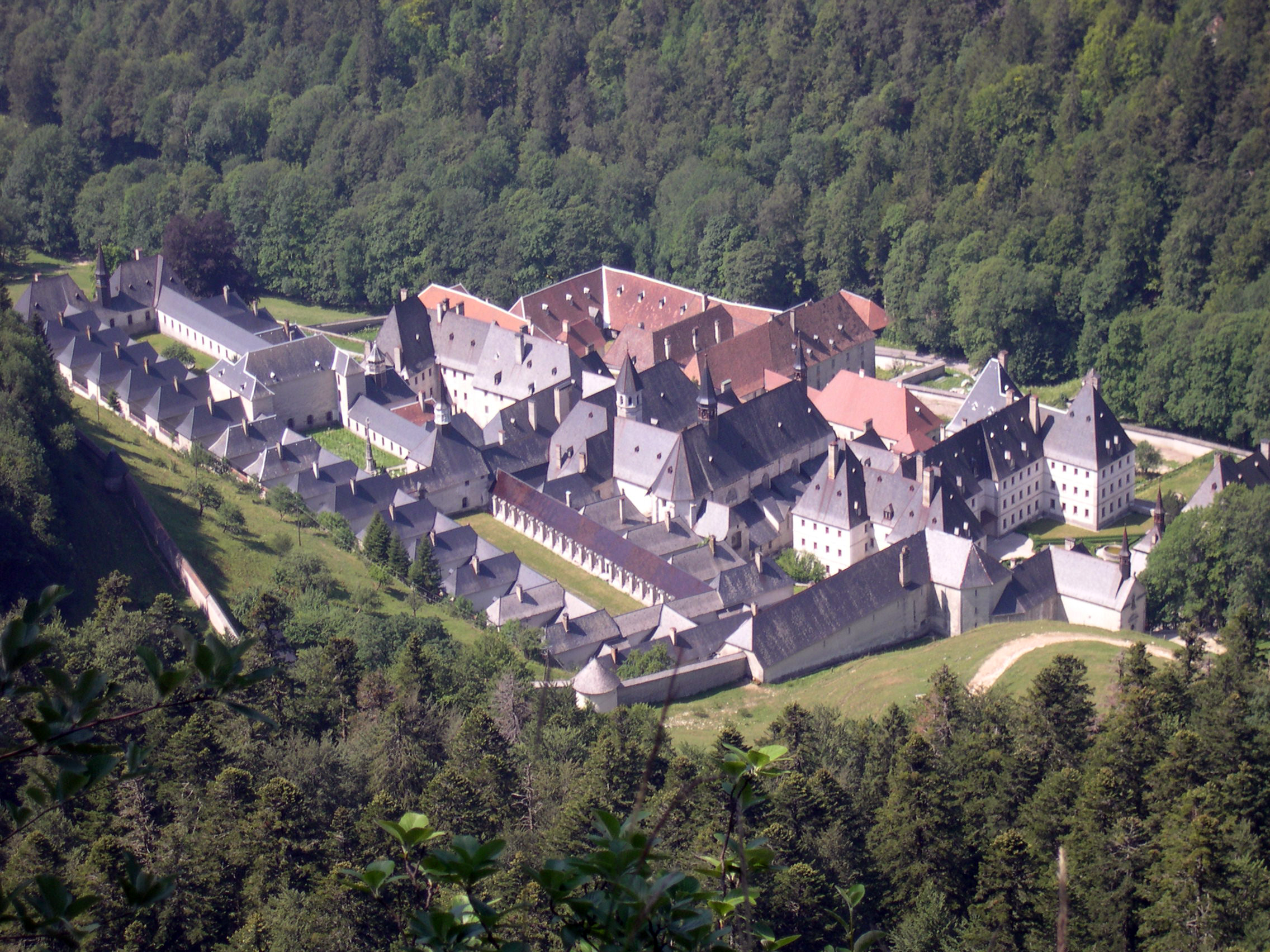
In 1084, Saint Bruno and six companions settled in the wild valley above the town, at the invitation of Hugh, Bishop of Grenoble, and founded the Grande Chartreuse — the mother house of the Carthusian order. The monks needed a gateway, workshops, forges, farms and a road, and Saint-Laurent-du-Pont became that gateway.
That relationship lasted for centuries and is still visible in the town's stones. The monks ran forges at Fourvoirie, just up the valley, and made the liqueur that still bears the mountain's name. They also guarded the entrance to their solitude: the road up the Guiers Mort passed through gates and narrow defiles into the Désert, which was long closed to outsiders and to armed men. Walk the town with that story in mind and it opens up. A bridge is no longer just a bridge. It is a boundary. A ruined forge is the industrial edge of a contemplative order that also had to eat, heat its buildings and earn its living.
What to see in the town itself
The bridges and the heritage circuit
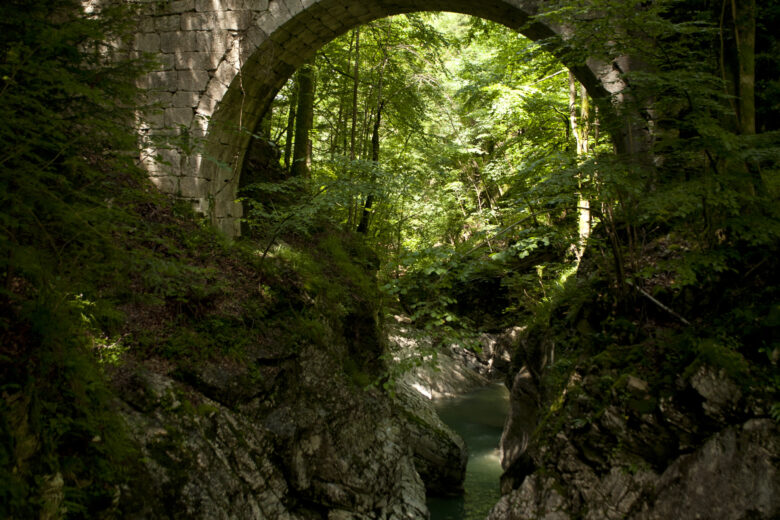
Start in the town centre, on foot, and look at the river. The Guiers Mort runs fast and clear here, and the town's historic bridges crossing its gorges are listed as historic monuments. They are worth a slow look: the way the stonework meets the rock, the narrowness of the gorge, and the drop below tell you why this crossing mattered.
The tourist office for the Cœur de Chartreuse area is in the town centre and is the right first stop for current maps, trail conditions and opening information, because mountain paths and sites in this valley change with the seasons and with safety works. Ask there for the local heritage circuit, the Circuit Historique et Patrimoine, which links historic houses, religious buildings, old industrial sites and viewpoints over the river. Follow it at a strolling pace. One building to look out for is the Chapelle Notre-Dame du Château, which has strong historical ties to the Carthusian fathers — the small, local end of a very large story.
Fourvoirie and the old distillery
A short way up the Guiers Mort valley lies Fourvoirie, the walk that most rewards a visitor here. The name comes from the Latin forata via, the pierced road driven through the rock towards the monastery in the early sixteenth century. Fourvoirie was the monks' industrial hamlet: forges, a sawmill, a farm and the first great production site of Chartreuse liqueur.
The old distillery produced Chartreuse from 1862 to 1935, with a break in the early twentieth century when the monks were expelled from France. The buildings are now ruins rather than a museum, and that is part of their atmosphere: you are looking at the place where a world-famous liqueur was made by monks in a mountain gorge. The official Chartreuse Tourisme route "D'une distillerie à l'autre" links the town with Fourvoirie and on towards the new distillery site, inaugurated in 2018, which is not open for visits. Do not walk there expecting a tour. For the production story, visit the Caves de la Chartreuse cellars at Voiron instead. Wear proper walking shoes for Fourvoirie; paths can be uneven and slippery after rain.
The road towards the Grande Chartreuse
From Fourvoirie, the road continues up the Guiers Mort towards the monastery, passing the Pont Saint-Bruno, with the older Pont de Parant still visible nearby, and then entering the narrow, forested Désert. The monastery itself cannot be visited — it is a living community under a rule of silence — but it can be seen from outside on foot, and the Musée de la Grande Chartreuse at La Correrie, the monastery's former lower house, tells the story of Carthusian life and work. Check current access at the tourist office before setting out, particularly in winter or after storms, and respect signs about silence, parking and private monastic land.
Day trips from Saint-Laurent-du-Pont
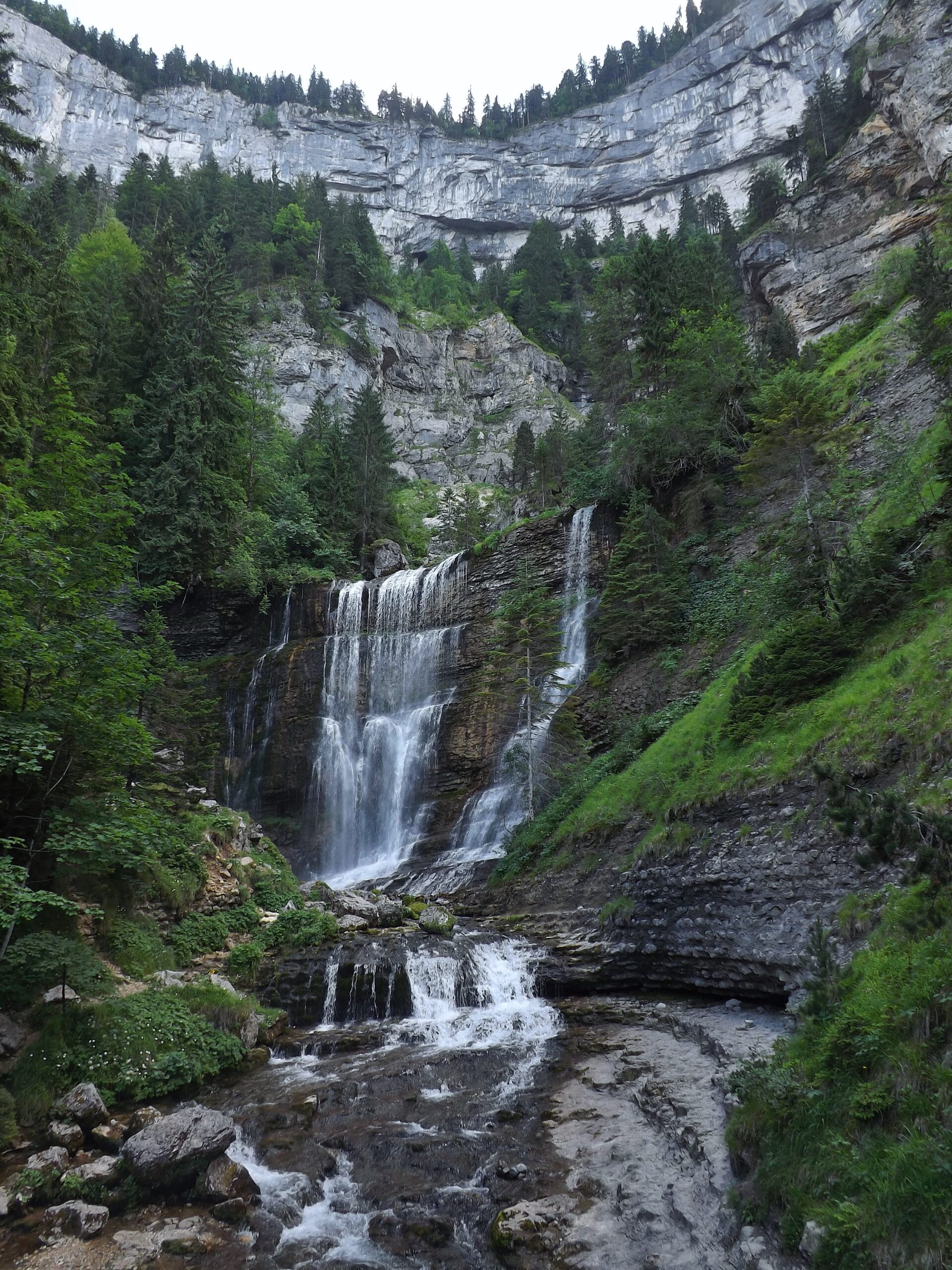
For a gentle day, combine the heritage circuit in the morning with Fourvoirie in the afternoon, and finish with a meal in town. For a wilder day, head east to the Cirque de Saint-Même, the limestone amphitheatre above Saint-Pierre-d'Entremont, where four waterfalls fall from cliffs above a forest walk. Paths there can be wet and steep, so keep to marked paths and do not attempt unmarked or closed sections.
For a frontier-history day, go north to Les Échelles and the Sardinian Road, the old road cut through the rock between France and Savoy. Read this site's guides to both before you go, because current access matters there more than general description. In particular, the Gorges du Guiers Mort itinerary has been reported as temporarily closed for safety reasons at times, so check its status before planning a walk there.
Cyclists have a serious base here too. The Col de Porte, Col du Cucheron and Col du Coq are well-known climbs, while the gentler Via Chartreuse follows the old Herretang canal. Valley-floor routes between Saint-Laurent-du-Pont, Les Échelles and Entre-Deux-Guiers are far gentler, and an electric bike turns the whole valley into a day's easy riding. In winter, high cols and some mountain roads may be closed or require winter equipment, while the town itself remains a year-round base.
Eating, staying and practical tips
Look for restaurants and bakeries serving mountain cooking: hearty, cheese-rich dishes, and the local cheeses and charcuterie of the Chartreuse and neighbouring Savoie. If you taste Chartreuse liqueur, do so slowly, ideally after learning something about it at Voiron or the Correrie museum.
Accommodation is the usual valley mix of small hotels, chambres d'hôtes and self-catering stays, and staying in Les Échelles or Saint-Pierre-d'Entremont and visiting for a day works just as well. A car makes the valley much easier, especially outside summer; public transport exists but is infrequent and seasonal, so check current timetables before relying on it. Our guide to getting to Chartreuse from the UK covers the journey in detail. Finally, many small sites have seasonal or limited opening, mobile signal in the gorges can be patchy, so download offline maps, and remember the valley is in the Parc naturel régional de Chartreuse: keep to marked paths and take litter home.
A suggested day
Start at the tourist office and pick up the heritage circuit. Walk the town centre and its bridges slowly. Walk or drive up to Fourvoirie and stand among the old distillery remains. If weather and legs allow, continue a little further up the Guiers Mort road towards the Désert, even if you do not go all the way to the monastery. Come back to town for a late lunch, then spend the afternoon on the gentler side of the valley — the canal path, the road towards Les Échelles, or a coffee by the river. That is Saint-Laurent-du-Pont at its best: not a list of attractions, but a threshold.
FAQ
Is Saint-Laurent-du-Pont worth visiting, or should I just pass through?
It is worth a day in its own right, and the best base in the western valley. The town rewards a slow heritage walk, Fourvoirie is a short and atmospheric outing, and the monastery road, the Cirque de Saint-Même and Les Échelles are all within easy reach.
Can you visit the Grande Chartreuse monastery from here?
The monastery itself is not open to visitors. You can see the buildings from outside on foot, and visit the Musée de la Grande Chartreuse at La Correrie for the full story of Carthusian life. Check current access and parking before you go.
Can you visit the Chartreuse distillery at Fourvoirie?
The old distillery is a historic ruin to walk to, not a working visitor distillery, and the new production site is not open for visits. For tastings and the production story, visit the Caves de la Chartreuse at Voiron.
Is it a good base without a car?
It is possible, but a car makes the valley far easier, especially for walks starting outside the town. Bus and train services are infrequent and seasonal, so check timetables before planning a car-free day.
What is the best time of year to visit?
Late spring to early autumn gives the widest choice of walks, with waterfalls fullest in spring. Autumn brings colour and quieter paths. Winter is beautiful and quiet, but high routes may be closed. See our best-time guide for the full picture.