
# Chartreuse Liqueur Distillery Visits: Voiron and Aiguenoire
If you come to the Vallons du Guiers, you will hear about Chartreuse liqueur long before you taste it. It is in the name of the mountains, in the story of the monks who have lived above the valley since 1084, and on the menu of almost every restaurant that serves a local digestif. The natural next question is: can you visit where it is made?
The honest answer has two parts, and getting them the right way round saves a wasted journey. You can visit the Chartreuse visitor site at Voiron, where the history, the plants and the tasting are presented in a guided tour through the historic cellars. You cannot, as an ordinary visitor, tour the working distillery at Aiguenoire, near Entre-deux-Guiers, where the liqueur is now actually produced. Aiguenoire is a production site, not a tourist attraction, and the distinction matters.
This guide explains both places, what each one is for, how to plan the Voiron visit properly, and how to combine it with a day in the Vallons du Guiers so that the liqueur stops being a bottle on a shelf and becomes part of the valley's story.
One liqueur, two sites: how Voiron and Aiguenoire fit together
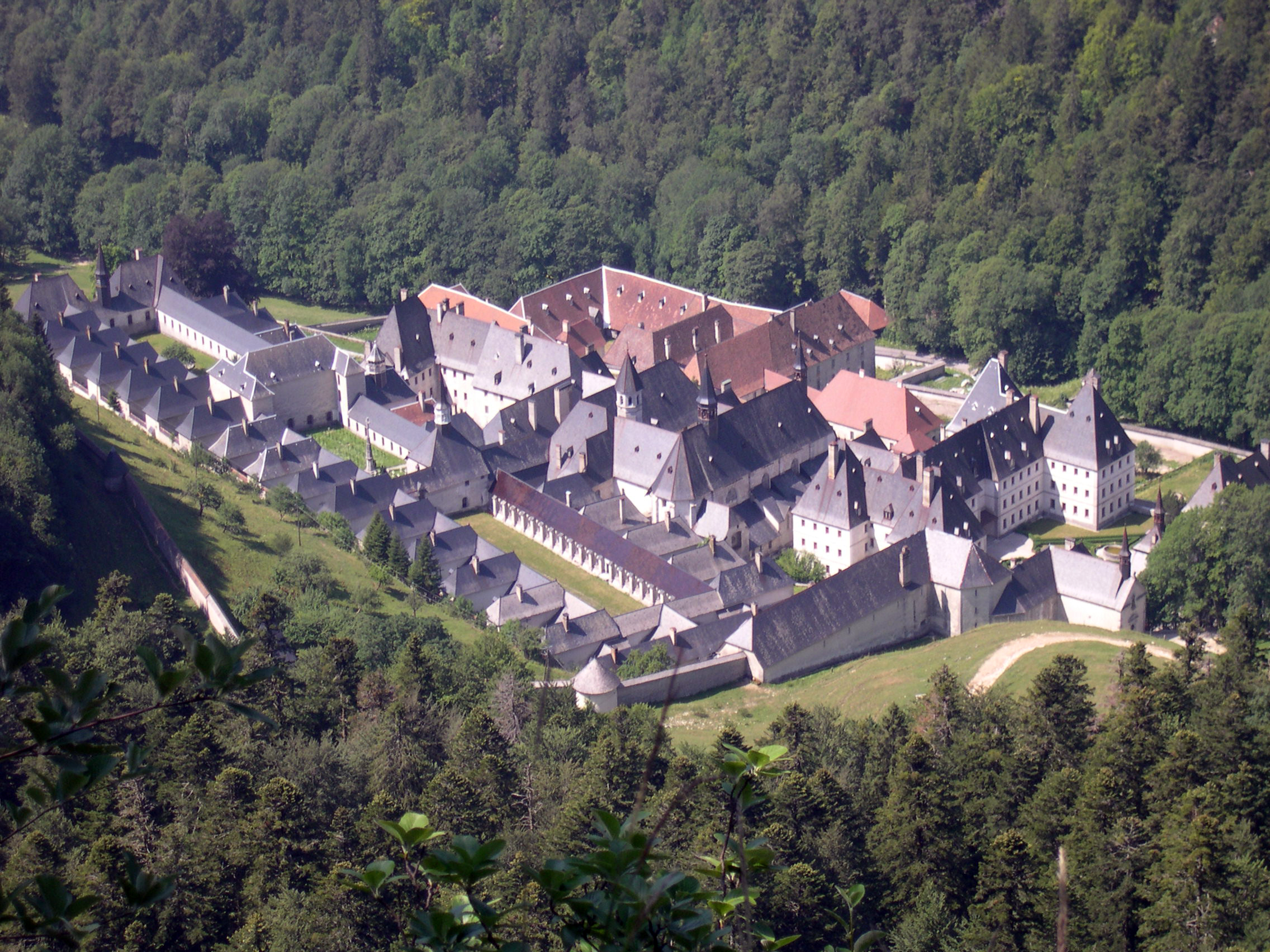
Chartreuse liqueur began with the Carthusian monks of the Grande Chartreuse, the monastery founded in 1084 by Saint Bruno and his companions in the wild valley above Saint-Laurent-du-Pont. The monks were given, in the early seventeenth century, a manuscript for an "elixir of long life" made from plants, and over the following decades they developed it into the herbal liqueurs known today. Only a very small number of monks know the full recipe, which is said to draw on 130 plants, and the recipe itself has never been published.
For much of its history the liqueur was made in the mountains, most famously at Fourvoirie, the monks' industrial hamlet up the Guiers Mort from Saint-Laurent-du-Pont, where the old distillery produced Chartreuse from 1862 to 1935, with a break when the monks were expelled from France in the early twentieth century. Fourvoirie is now a ruin to walk to, not a distillery to tour, and it is covered in our Saint-Laurent-du-Pont guide.
Production later moved to Voiron, at the foot of the Chartreuse on the road towards Grenoble, where historic cellars stored and aged the liqueur for many years. Then, in 2018, a new production distillery was inaugurated at Aiguenoire, on the Route de Berland at Entre-deux-Guiers, right in the heart of the Vallons du Guiers. That move is why the picture is now split: the making happens at Aiguenoire, in the valley, while the visiting, the museum and the tasting happen at Voiron, outside it.
Think of it this way. Voiron tells the story and lets you taste the result. Aiguenoire makes the result, behind closed doors. Fourvoirie shows you where the story used to happen. Together, the three places give you the whole arc, but only Voiron is a visit in the ordinary sense.
Visiting the Caves de la Chartreuse at Voiron
What the visit actually is
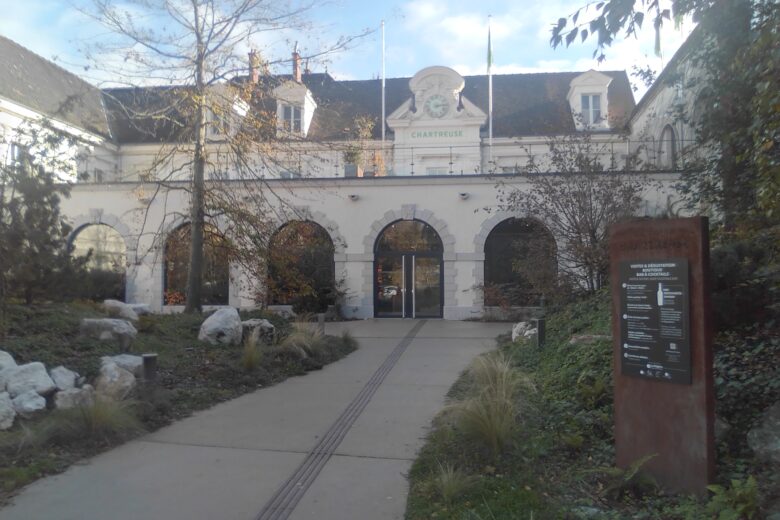
The Caves de la Chartreuse at Voiron, at 10 Boulevard Edgar Kofler, is a guided visitor site in a redeveloped space of about 2,500 square metres. It is not a self-guided museum where you wander at your own pace, and it is not a walk through a working production line. Every tour is guided, and booking is through online ticketing.
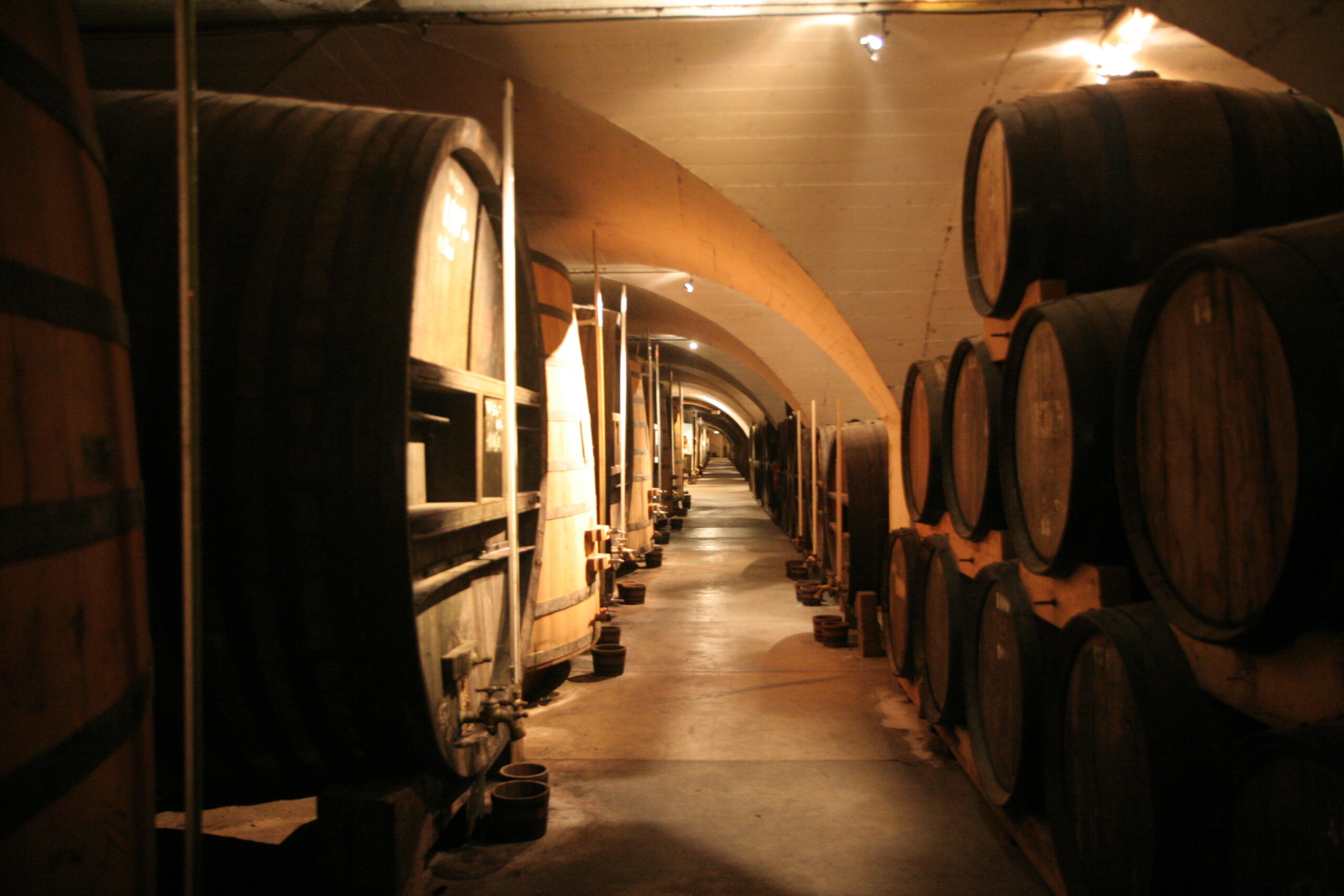
The tour moves through museum spaces that follow the major periods of Chartreuse history from 1084 to the present day, with around 1,200 original heritage pieces on display. There is a section devoted to the plants at the heart of the liqueur, designed to be sensory as well as visual: you can see, touch and smell the botanicals that give Green and Yellow Chartreuse their character, rather than simply reading a list of ingredients. The route also passes through the historic cellar at Voiron, where the atmosphere of the old ageing site survives even though production itself has moved to Aiguenoire.
The visit ends, as it should, with a commented tasting. Visitors taste the traditional Green and Yellow liqueurs, or a non-alcoholic herbal tea if they prefer or if they are not drinking alcohol. Green Chartreuse is the more powerful, intensely herbal of the two; Yellow is softer, sweeter and more honeyed. Tasting them side by side, after hearing about the plants, is the point of the visit: you begin to recognise flavours you would miss if you simply sipped a digestif after dinner.
There is also a cocktail bar on site and a shop selling Chartreuse products. Purchases have been reported as limited, and some special bottlings are not always available, so do not plan a visit around buying a particular rare bottle.
Practical details for UK visitors
Tours are guided and must be booked on the official online ticketing system; it is advised to buy tickets online, with on-site purchase only subject to availability, and no reservations by telephone. An English-language tour is offered, listed at 13:40 on reservation, which is the tour most UK visitors should aim for rather than joining a French-language tour and hoping to follow it. Group size is limited, listed at 19 participants, and the tour lasts about 1 hour 15 minutes, although you should allow around two hours on site in total once you include the shop, the bar and arrival time.
The site states that it is accessible to people with disabilities, with wheelchairs available on request, as well as portable folding seats and hearing amplifiers. Animals are not allowed on the premises, except for assistance dogs. The full adult price was listed at 13 euros for the classical tour in English, but prices, tour times and the English-tour schedule can change, so check the official site for your dates before you travel and treat any price in this guide as a prompt to verify, not as a booking fact.
Aiguenoire: the working distillery you cannot tour
Aiguenoire, at 1271 Route de Berland, Entre-deux-Guiers, is the modern distillery complex where Chartreuse liqueur is now distilled, blended and aged. It sits in the Vallons du Guiers itself, close to the confluence of the Guiers Mort and the Guiers Vif, which makes it tempting to assume it must be the valley's great visitor attraction. It is not open for visits in the way Voiron is, and our Saint-Laurent-du-Pont guide already warns visitors not to walk to a production site expecting a tour.
That closed door is not a snub. Aiguenoire is a working food-production site, with the secrecy of the recipe, the safety requirements of distillation, and the daily rhythm of a factory to protect. The monks who hold the recipe supervise the blending of the plants, and the liqueur is then aged in barrels under carefully controlled conditions before bottling. None of that lends itself to a public tour route, and no regular visitor programme is advertised for the site.
What you can do at Aiguenoire is understand it in context. Drive or cycle past it on the valley road and you will see a modern complex in a valley setting, a striking contrast with the ruined distillery at Fourvoirie and the historic cellars at Voiron. Pair that glimpse with a visit to Entre-deux-Guiers itself and with the Voiron tour, and you have the full modern story. Do not plan a day around entering Aiguenoire. If a special open day is ever advertised through official Chartreuse channels, confirm it through those channels before you travel.
The history in brief: monks, exile and return
The Carthusians settled in the Chartreuse in 1084 and built a life of silence, prayer and manual work in a deliberately remote place they called the Désert. The elixir manuscript arrived centuries later, and the monks turned a medicinal recipe into a liqueur that could support their community. In the early twentieth century the monks were expelled from France and production moved, including a period in Spain, before the order returned. Fourvoirie, Voiron and now Aiguenoire are the physical chapters of that story: a mountain forge hamlet, a lowland cellar town, and a modern valley distillery. The Musée de la Grande Chartreuse at La Correrie, the monastery's former lower house, tells the monastic side, while Voiron tells the liqueur side.
A suggested day: Voiron plus the valley
Spend the morning in Saint-Laurent-du-Pont, walking the heritage circuit and, if legs and weather allow, the short way up to Fourvoirie to stand among the old distillery ruins. Then drive south to Voiron for the early-afternoon English tour, allowing plenty of time for the drive and parking. Alternatively, reverse the day: Voiron in the morning, then Entre-deux-Guiers in the afternoon, passing Aiguenoire on the road. Do not add the Grande Chartreuse monastery itself as a third stop on the same day unless you have checked access and parking in advance: it is a living community under a rule of silence and cannot be visited inside.
If you are travelling with children, note that the Voiron tour is a guided museum and tasting visit, not a children's attraction, although the plant section gives younger visitors something to look at and smell, and the non-alcoholic herbal tea tasting includes children and non-drinkers in the final part. Check the site's current arrangements for children before booking.
FAQ
Can you tour the Chartreuse distillery at Aiguenoire?
No, not as an ordinary visitor. Aiguenoire at Entre-deux-Guiers is the working production distillery and is not open for visits. For tours and tastings, go to the Caves de la Chartreuse visitor site at Voiron.
Is the Voiron visit a real distillery tour?
It is a guided visitor site in the historic Voiron cellars, with museum spaces, a plant section, the historic cellar and a commented tasting. Production itself has moved to Aiguenoire, so you will not see a working production line at Voiron.
Do I need to book the Voiron tour in advance?
Yes. All tours are guided and must be booked on the official online ticketing system. On-site tickets are only available subject to availability, and there are no telephone reservations.
Is there an English-language tour at Voiron?
Yes, an English tour is listed at 13:40 on reservation. Book that tour specifically rather than assuming a French-language tour will be given in English.
Can children visit the Caves de la Chartreuse?
The visit is a guided museum tour, and the final tasting includes a non-alcoholic herbal tea option. Check the site's current arrangements for children before booking, as the tour is not designed as a children's attraction.
What is the difference between Green and Yellow Chartreuse?
Green is the stronger, more intensely herbal liqueur; Yellow is softer, sweeter and more honeyed. Tasting them side by side at Voiron is the best way to learn the difference.
Can I visit Fourvoirie as well?
Yes, as a walk to a historic ruin, not as a distillery tour. The old distillery at Fourvoirie, up the Guiers Mort from Saint-Laurent-du-Pont, produced Chartreuse from 1862 to 1935 and is now a ruin beside the river. See our Saint-Laurent-du-Pont guide for the walk.