
# Best Time to Visit Chartreuse, France
There is no single best time to visit Chartreuse. There is a best time for the trip you actually want: high walking in summer, waterfalls in spring, colour and quiet in autumn, snow in winter. The Chartreuse is a limestone massif of sharp contrasts — valley floors that feel almost Mediterranean in a June heatwave, and summits that hold snow well into spring — and the Vallons du Guiers feels those contrasts more than most places, because its villages sit low while its cliffs and cols rise steeply above them.
Most guides answer this question with a single month or a vague "spring to autumn". That is not wrong, but it is not useful. It does not tell you when waterfalls are actually flowing, when high paths are actually clear, when the valley is actually crowded, or when a winter trip is actually enjoyable rather than just possible. This guide does, season by season, with honest trade-offs and the warnings that matter in a mountain valley: closures, snow, heat, and the difference between a valley walk and a summit walk.
The short version: for the widest choice of walks and open sites, come from late spring to early autumn. For the quietest, most atmospheric valley trip, come in autumn. For snow, come in mid-winter and plan around it. For waterfalls, come in spring.
Valley versus summit: two weathers
The first thing to grasp is that "Chartreuse weather" is two weathers. Valley floors — Saint-Laurent-du-Pont, Les Échelles, Entre-Deux-Guiers — sit at a few hundred metres. Summits — Chamechaude at 2,082 metres, the Dent de Crolles at 2,062 metres, the Grand Som at 2,026 metres — sit more than a vertical kilometre above them. A forecast for Grenoble or Chambéry tells you about the lowlands, not about wind, cloud or snow on a summit ridge.
That gap matters in every season. In summer, a hot valley day can still mean a cool, windy summit, and thunderstorms can build over the limestone while the valley stays sunny. In spring, the valley can be green and warm while high paths are still under snow. In autumn, the valley can be golden and mild while the first snow dusts the tops. Always check a mountain-specific forecast before a high walk, carry a waterproof and an extra layer even on a day that starts warm, and remember the Chartreuse is a real mountain range, whatever its modest height by Alpine standards.
Spring (March to May): waterfalls and melting snow
Spring is the valley's most dramatic season, and the least predictable. Early spring is still winter on the high ground: snow patches linger, some high routes may be closed or need winter equipment, and weather can swing from warm sunshine to cold rain and late snow in a single week. Valley walks and village exploring are usually enjoyable, but high summits are not a safe assumption in early spring.
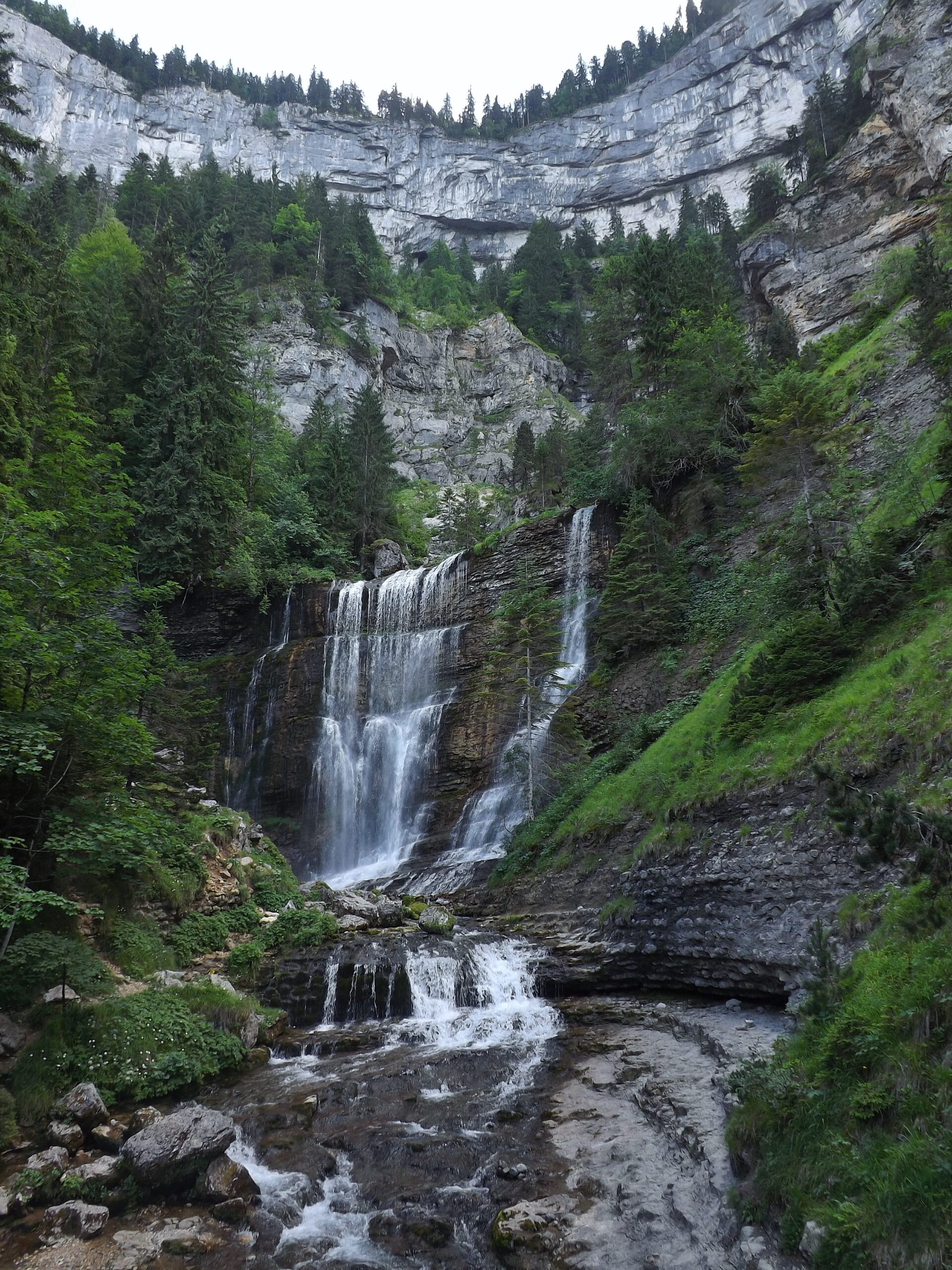
Late spring, from May onwards, transforms the valley. Snowmelt feeds the rivers, and waterfalls are at their most powerful. The Cirque de Saint-Même, above Saint-Pierre-d'Entremont, is at its best: four waterfalls — the Cascade des Sources, the Grande Cascade, the Cascade Isolée and the Pisse du Guiers — fall from cliffs above a forest walk, fed by the underground sources of the Guiers Vif. The Cascade de la Pisserotte near Saint-Laurent-du-Pont is likewise at its most impressive during spring snowmelt. If waterfalls are your reason for coming, spring is your season.
Wildflowers follow the melt, first in valley meadows, then higher. Forests are fresh and green, light is soft, and the valley is quieter than in summer, especially on weekdays. The trade-offs are mud, changeable weather, and the fact that not everything is open yet: seasonal sites and higher paths open progressively into early summer, so check current access for anything you are specifically travelling to see. Spring suits valley walking, the Sardinian Road, Saint-Laurent-du-Pont and Fourvoirie, gentle cycling, and photography. It does not suit ticking off the highest summits unless you are equipped for snow and have checked the route.
Summer (June to August): the main walking season — and the busiest
From late May through to October, broadly, is the main hiking window: high paths generally clear, cols open, and the full range from valley strolls to summit climbs available. June and early July are the sweet spot for many walkers: long days, green landscapes, wildflowers still out higher up, and fewer visitors than in August.
July, and especially August, are the busiest months. French school holidays bring families, walkers and cyclists to the well-known sites, and popular trailheads can feel crowded, particularly at weekends. The Vallons du Guiers is quieter than the famous Alpine resorts, but it is not empty in August. Walk on weekdays, start early, and choose a lesser-known valley path over the most famous viewpoint if you want quiet.
Summer heat is real in the valley, even if summits stay cooler. Carry more water than you think you need, especially on exposed limestone with little shade. Start high walks early to avoid afternoon heat and thunderstorms, a genuine hazard on exposed ridges: if you hear thunder or see dark clouds building, descend. Do not wait to see if the storm passes.
Autumn (September to November): colour, quiet and the valley at its best
Autumn is the connoisseur's season, and the one this site would choose if it had to choose one. September keeps much of summer's walking, with cooler temperatures, quieter paths and light photographers love. High paths are usually still open into October, forests begin to turn, and the valley feels like it belongs to its residents again after August.
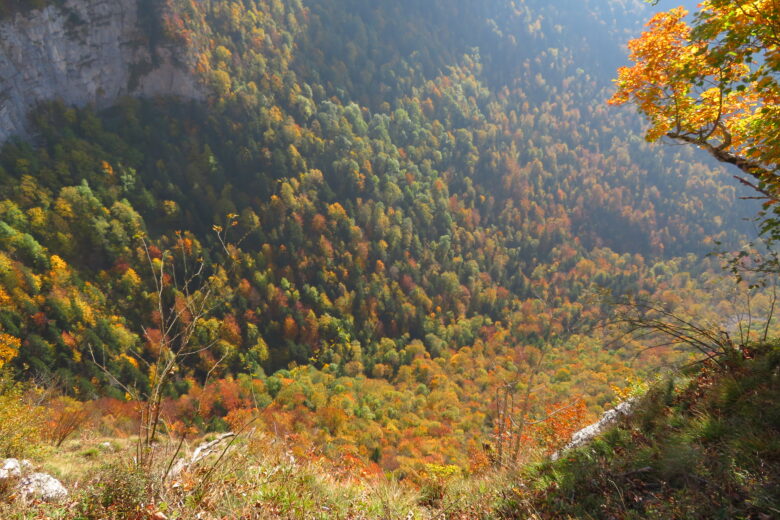
October brings the colour. Beech, maple, oak and conifer across the limestone slopes turn gold, russet and red, and low autumn sun lights the cliffs in a way summer's high sun does not. Walking is often crisp and clear, with views across the massif and, on clear days, to Mont Blanc and the higher Alps. It is also the season for mushrooms, chestnuts, and hearty mountain cooking as evenings turn cool.
Late autumn is the transition. Days shorten, rain becomes more frequent, first snow may fall on summits, and some seasonal sites close. Valley walks remain enjoyable, and Saint-Laurent-du-Pont and Les Échelles are at their most local and unhurried. But high walking becomes a day-by-day check, and paths straightforward in September may be wet, leaf-covered and slippery, or closed. November suits a valley-based trip of villages, food, history and gentle walks — not an ambitious summit itinerary unless you are prepared for winter conditions.
Access needs care in autumn. The Cirque de Saint-Même walk, for example, is listed with a seasonal open period from spring to the end of October, subject to favourable weather — a reminder that "open" here is often seasonal and weather-dependent. Always check current access before a special autumn trip, and have a valley-level alternative in mind.
Winter (December to February): snow, silence and a different valley
Winter transforms the valley. Valley floors may have little snow while summits and higher villages are white. The Chartreuse has small, family-friendly ski areas — Saint-Pierre-de-Chartreuse and the Col de Porte area are best known — and extensive snowshoe and cross-country possibilities, but it is not a big-resort destination, and that is its charm. Winter here is quiet and local: snowshoe walks, winter forest, village life and cosy evenings rather than lift queues.
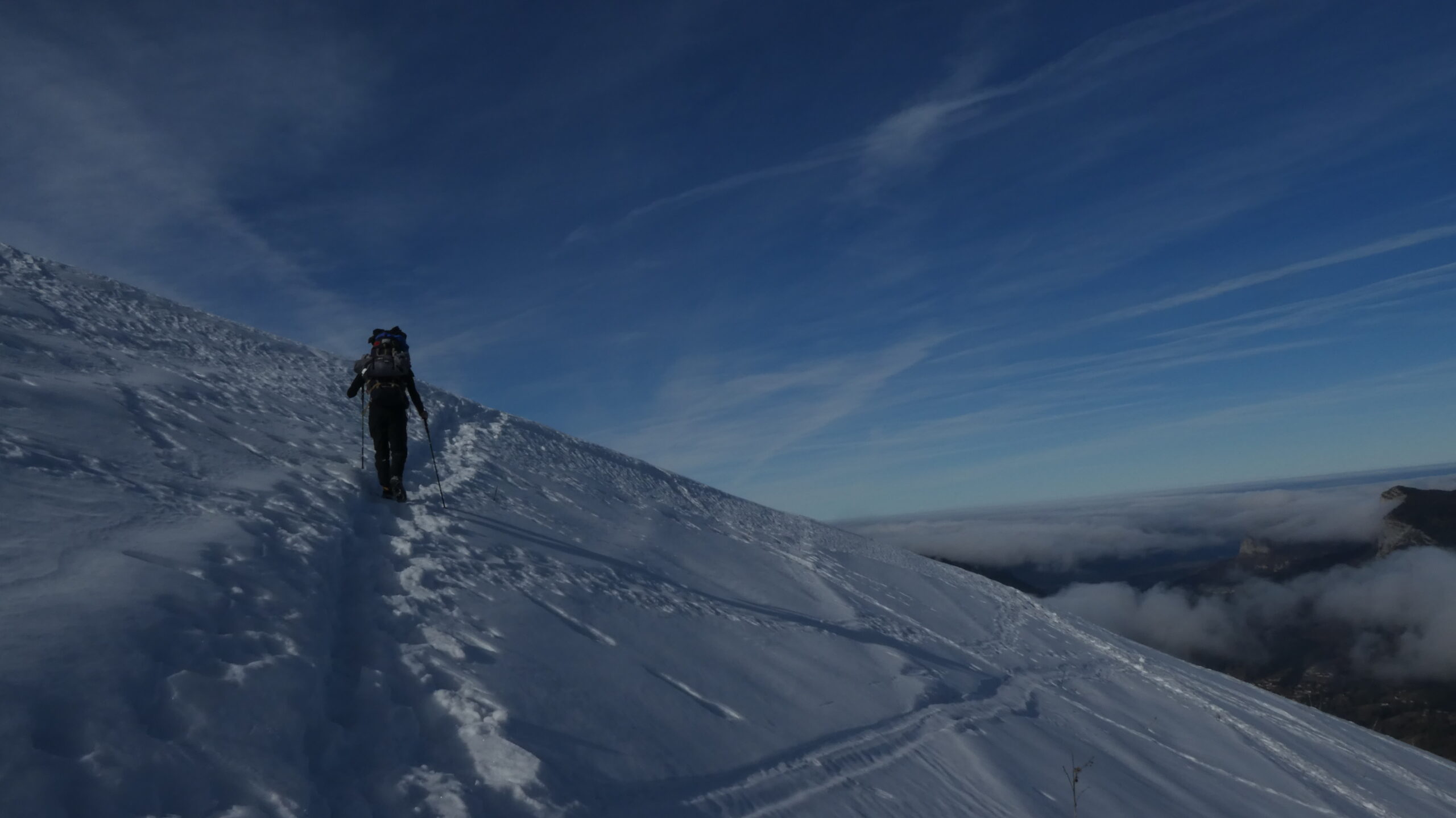
Winter walking needs a different approach. Valley paths can be walked with good boots, but high paths need snowshoes or skis, avalanche awareness, and route knowledge a summer walker does not need. Do not attempt a summer summit route in winter without winter equipment and experience, and do not rely on waymarking that may be buried under snow. Guided snowshoe outings are a good option for first-time winter visitors, and tourist offices can advise on current conditions.
Driving in winter brings the loi montagne, requiring winter equipment in designated mountain communes from 1 November to 31 March — four winter tyres with the Alpine symbol, or chains or snow socks carried and fitted when required. Our getting-here guide covers this in detail; the seasonal point is simple: a winter trip needs winter driving preparation, and a hire car collected outside a mountain area may not automatically be equipped.
Winter is also when indoor attractions matter most. The Musée de la Grande Chartreuse at La Correrie, the Caves de la Chartreuse at Voiron, village churches and the valley's restaurants are not consolation prizes in winter. They are the trip, alongside short snowy walks and the extraordinary quiet of the Désert road in snow. Come in winter expecting summer walking and you will be disappointed. Come expecting winter, and you will find a valley few English-speaking visitors ever see.
When to think twice
No season should be avoided entirely, but some combinations deserve a second thought. Do not plan a high-summit itinerary for early spring without checking snow. Do not plan a quiet, empty-valley trip for mid-August and expect solitude at famous sites. Do not plan a winter trip without winter driving preparation and a valley-level plan for days when high ground is closed. Do not assume a site open in July is open in February, or a path easy in summer is easy in wet autumn or icy winter.
So, when should you go?
Go in late spring for waterfalls and wildflowers, happy with valley and mid-level walks. Go in June or September for the best all-round walking with fewer crowds. Go in July or August for the fullest choice, warmest weather and family logistics, not minding company on popular paths. Go in October for colour, quiet and atmosphere. Go in winter for snow, silence and a valley that feels entirely local — prepared for winter driving and winter walking.
The Vallons du Guiers rewards visitors in every season, but differently. The mistake is not choosing the "wrong" month. It is arriving with a summer plan in winter, a summit plan when summits are still under snow, or an expectation of solitude in August. Choose the season that fits the trip you want, check conditions for the week you travel, and let the valley meet you where it is.
FAQ
What is the best month to visit Chartreuse?
For most walkers, June and September offer the best balance: high paths open, long days, pleasant temperatures, fewer visitors than July and August. For waterfalls, May is hard to beat. For autumn colour, October. For snow, January and February.
Is Chartreuse good in winter if I do not ski?
Yes, if you enjoy snowshoe walking, winter forest, quiet villages and indoor attractions such as the Correrie museum and Voiron cellars. It is not a big-resort destination, and high summer routes should not be attempted in winter without equipment and experience.
Is August too crowded?
August is the busiest month, especially at popular trailheads, but the Vallons du Guiers is quieter than the major Alpine resorts. Walk on weekdays, start early, and choose lesser-known valley paths for a quieter experience.
When are the waterfalls at their best?
In spring, when snowmelt feeds the rivers. The Cirque de Saint-Même falls and the Cascade de la Pisserotte are at their most powerful in late spring; in a dry late summer, some falls can be much reduced.
Can I hike in November?
Valley and lower walks are usually enjoyable, but high paths may be wet, slippery or closed, and first snow may have fallen on summits. Check current conditions and have a valley-level alternative ready.